Omnichannel vs Multichannel: What's the Difference (and Does It Actually Matter?)

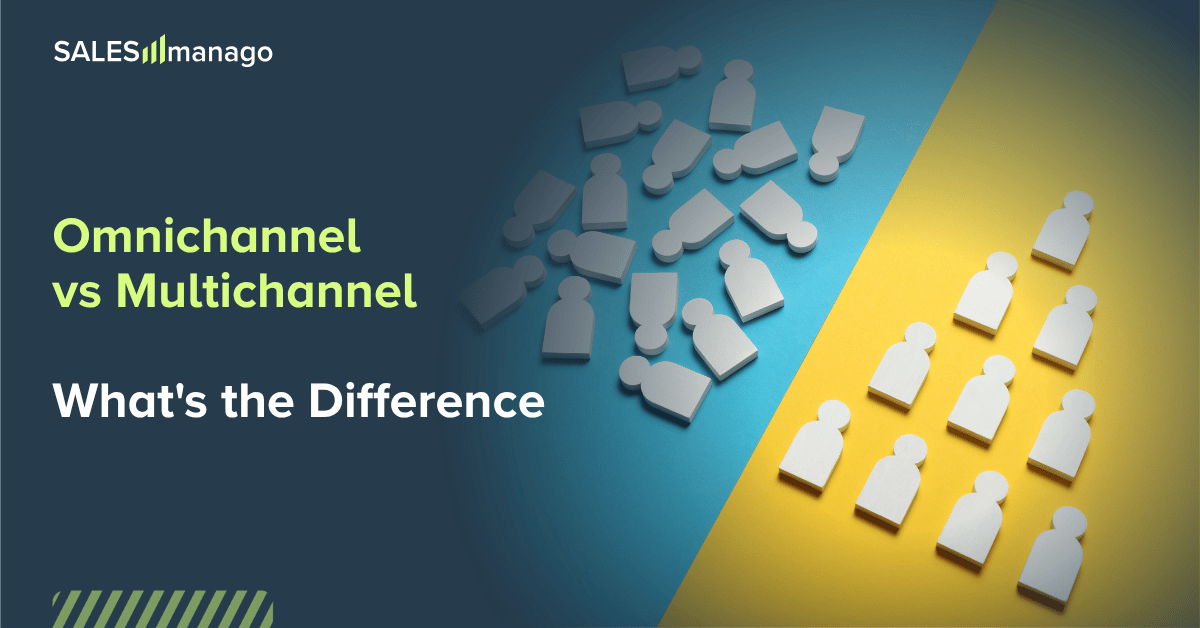
You’ve seen the slide before. You know the one with your brand in the middle, channels radiating outward like a proud little sun. Email, SMS, web push, social, paid ads, on-site personalisation, maybe a loyalty program if you're feeling ambitious. It says "omnichannel" at the top in a font that means business.
And in most cases, it's not the whole truth.
Not deliberately. Nobody sets out to mislabel their own strategy. But the gap between "we're present on multiple channels" and "we're running a genuinely connected customer experience" is bigger than any diagram suggests, and the consequences of confusing the two show up in your revenue, your retention numbers, and the Sunday-evening anxiety of every marketing manager who suspects their channels are talking past each other rather than to each other.
This article is about that gap. What multichannel and omnichannel actually mean, why the difference matters more than the almost identical vocabulary implies, and, most usefully, how to tell which one you're actually running, regardless of what you think you are.
Multichannel marketing means you're present on more than one channel. Simple. Email and SMS. Web and social. Paid ads and on-site banners. You're reaching customers in multiple places, which is always better than reaching them in just one.
But, and this is a big but… in a multichannel setup, each channel operates on its own terms. The email team builds email campaigns. The paid team runs paid. The on-site team handles banners and pop-ups. Each channel has its own calendar, its own goals, etc, etc. They might share a brand guidelines PDF, but they don't really share customer data in any useful way.
This is just what happens when you add channels faster than you connect them. And for a lot of eCommerce brands, especially in the early scaling phase, it works well enough. You're covering more ground. You're reaching more people. The fact that your email platform doesn't know what your paid ads are doing isn't ideal, but it's not exactly an emergency.
The problem is when "good enough" stops being good enough. And for most mid-market eCommerce brands, it stops being enough sooner than you expect.
The moment your channels start competing with each other instead of complementing each other, for example, when your customer gets a discount email for something they bought yesterday, or your retargeting ad showing a product they've already returned, or your SMS pinging out ten minutes after your email saying the same thing… that's multichannel slowly chomping away at your customer experience.
Omnichannel marketing also uses multiple channels. The difference is that those channels are connected to a single, unified view of the customer. Every customer touchpoint, your email, SMS, web push, on-site personalisation, paid audiences, even your loyalty program. All draw from the same customer data and feed information back into the same place.
The customer doesn't experience "channels" at all. They experience your brand. The email they receive reflects what they browsed on-site last night. The web push they get today knows they opened yesterday's email but didn't click. The on-site experience adjusts based on whether they're a first-time visitor, a lapsed buyer, or someone who's spent £2,000 in the last six months and really doesn't need to see the welcome pop-up again.
The important distinction is this: omnichannel isn't just "more channels." You can be omnichannel with four channels and multichannel with twelve. The number of channels has nothing to do with it. What matters is whether the channels share a brain, a single customer data layer that every channel reads from and writes to.
One costs you money and annoys the customer. The other doesn't.
Unfortunately getting from the first scenario to the second isn't a strategy change. It's an infrastructure one. Which brings us to the bit nobody puts in the comparison table.
Every article on this topic includes some version of the same visual. Multichannel: separate circles, no lines between them. Omnichannel: circles connected to a central hub, lines everywhere, everything talking to everything.
It's a perfectly fine diagram. It just doesn't tell you anything useful.
The actual dividing line between multichannel and omnichannel isn't a philosophy. It isn't "customer-centric vs channel-centric" (though that framing is technically accurate), it doesn't help you at 9am on a Tuesday trying to work out why your email and on-site personalisation are contradicting each other.
The real difference is the data layer.
In a multichannel setup, customer data lives in multiple places. Your email platform has email engagement data. Your ad platform has ad interaction data. Your eCommerce platform has transaction data. Your loyalty tool has tier data. None of these systems have a complete picture of the customer, because no single system owns the full profile.
In an omnichannel setup, there's a central data layer, usually a Customer Data Platform (CDP), that collects behavioural, transactional, and engagement data from every touchpoint, stitches it into a single customer profile, and makes that profile available to every channel. That's it. That's the whole trick. Queue applause.
The reason most articles don't frame it this way is that "you need a CDP" is a harder sell than "you need a mindset shift." But the mindset shift without the infrastructure change is just a nicer-looking version of multichannel. You've relabelled the slide. The customer experience hasn't changed.
Getting clear on the infrastructure question makes the next uncomfortable realisation a lot easier to process.
| Multichannel | Omnichannel | |
|---|---|---|
| Customer data | Lives in each channel's own tool: email platform, ad platform, eCommerce backend, loyalty app, etc. | Unified in a single CDP; every channel reads from and writes to the same profile |
| What the customer sees | Potentially contradictory messages across channels (discount email after they already bought) | Consistent, contextual experience; each channel knows what the others have done |
| Channel coordination | Channels operate independently, often with separate teams and calendars | Channels are orchestrated from a single data layer and automation engine |
| Personalisation depth | Per-channel segmentation (email segments, ad audiences, on-site rules are all built separately) | Cross-channel personalisation based on the full behavioural and transactional profile |
| Reporting | Each channel measured in its own dashboard; hard to see the full customer journey | Journey-level measurement, i.e. which combination of touchpoints drives the most value |
| When it works | Early growth, small customer base, still testing which channels earn their spot | Retention matters, channels need to stop contradicting each other, CLV is a real KPI |
| What it requires | Presence on multiple channels (the easy part) | A unified data layer connecting those channels (the part everyone skips) |
A significant number of eCommerce brands currently describing their strategy as omnichannel are running multichannel with better propaganda.
A few diagnostic questions worth asking honestly:
When a customer moves from one tier to another in your loyalty program, does your email platform know about it instantly, or does someone export a CSV?
When a customer browses three product categories on-site, does tomorrow's email reflect those categories, or does it send the same newsletter to everyone?
When a customer buys through your social media channel, does your retargeting ad spend adjust that day, or does the ad platform keep spending to convert someone who's already converted?
If your on-site personalisation shows a returning customer different homepage content than a first-time visitor, is that based on real-time behavioural data, or is it a simple two-segment split you set up six months ago and haven't touched since?
If more than one of those answers involves a manual process, a CSV export, a delay of more than a few hours, or the phrase "we're working on that integration"... Unfortunately, your strategy is multichannel. The channels exist. They're just not connected at the data level.
This isn't a criticism. Most brands evolve through multichannel on their way to omnichannel. It’s the natural first step. The problem is when the language gets ahead of the reality, because it stops you from diagnosing the actual issues.
Being honest about where you are is the fastest route to getting where you want to be. And sometimes, where you are is perfectly fine for now.
Not every eCommerce brand needs omnichannel ‘like yesterday’. Multichannel is a real strategy with real advantages. For one it's simpler to manage,plus it doesn't require a unified data platform, and it lets you test channels independently without needing everything wired together first.
Multichannel tends to work well when you're in your early growth phase and your channel count is still manageable. When your customer base is small enough that segmentation doesn't need to be real-time. When your purchase cycle is long enough that the timing gaps between channels don't create visible contradictions. When you're still figuring out which channels actually drive value and you don't want to integrate something you might switch off next year.
It stops being fine when three things start happening. Here’s what you’ll see:
First, your channels start contradicting each other.
The customer gets a "we miss you" email on the same day they made a purchase via a different channel. Your paid ads are targeting people who just unsubscribed from email. The left hand doesn't know what the right hand sold yesterday. It’s all a bit chaotic and confusing.
Second, your customer data is fragmented enough that you can't answer basic questions.
What's the CLV of customers who engage on three or more channels? Which acquisition source produces the highest-value repeat buyers? What's the actual impact of your SMS program on purchase frequency? If answering these requires pulling data from different dashboards and a spreadsheet, you've outgrown multichannel.
Third, and this is a doozy, your retention economics start mattering more than your acquisition economics.
Multichannel is fine for reach. It's not built for retention, because retention requires knowing who the customer is across touchpoints and responding accordingly. When your growth model shifts from "acquire more" to "keep more and grow more," the channels need to share a brain.
That doesn't happen overnight. But when it's happening, the move to omnichannel is your best option.
The move isn't a rebrand, a new slide deck, or a reorganisation of your marketing team. It's an infrastructure project. And for mid-market eCommerce brands, it doesn't need to take eighteen months and a seven-figure budget.
The core of it is three things.
First, unify your customer data.
Every channel you're currently running is generating behavioural and transactional data. The question is whether that data is being collected, stitched, and stored in one place. A Customer Data Platform does this and builds a single, unified customer profile that every downstream channel can access.
This is the foundation. Don’t move on without it.
Second, connect the execution layer.
Once your data's unified, the channels need to be able to read it and act on it. When a customer hits a new loyalty tier, the email flow should fire automatically. When a customer browses a category three times without buying, the on-site personalisation should adapt. When a customer converts, the ad audiences should update to stop spending on them. These are the kind of automated workflows you can expect with a proper omnichannel setup.
Third, measure across channels, not within them.
Moving from multichannel to omnichannel means your reporting has to change too. Instead of measuring email performance in the email dashboard and SMS performance in the SMS dashboard, you measure customer journeys. What sequence of touchpoints produces the highest CLV? Which combination of channels drives the fastest second purchase? Where in the journey are your customers dropping off?
SALESmanago can help with that, our CDP combines all your channels into one data spine so that your channels move from multichannel individual stars, to an omnichannel 2011 Barcelona-esque team.
Forget the Starbucks case study posted everywhere else. Here's what omnichannel actually looks like for a mid-market eCommerce brand doing it properly.
A customer visits your site, browses summer dresses, and leaves without buying. That browsing data lands in the CDP immediately. Twenty minutes later, the automation workflow triggers a web push with a curated edit from the category they browsed. They click through, add something to the basket, but don't check out. The next morning, an email lands, and its not a generic "you left something behind", but one that includes the specific item, alternatives in the same category, and a note about the loyalty points they'd earn on the purchase.
They buy. The CDP updates their profile. The retargeting ads stop showing them summer dresses and start showing them accessories that complement what they just bought. Their loyalty tier recalculates. The next email they receive reflects their updated status. The on-site experience, next time they visit, shows them recommendations based on what they bought. Tiki-taka.
None of this requires anyone to touch a spreadsheet, export a segment, or manually update a list. It happens because every channel is reading from and writing to the same customer profile, in real time.
That's the real difference between multichannel and omnichannel. It's not about being on more channels. It's about those channels knowing the same things about the same customer at the same time.
And for the marketer running it? It means spending less time coordinating campaigns across disconnected tools and more time on the work that actually brings value, and let’s face it, is more fun.
Does the difference between omnichannel and multichannel actually matter? Yes it does, obviously, but not for the reason most articles give you.
It doesn't matter because omnichannel is philosophically superior. It matters because revenue compounds when channels are connected and leaks when they're not. Every time a customer receives a contradictory message, or gets treated like a stranger on a channel where they've already spent hundreds of pounds, you risk alienating them.
The move from multichannel to omnichannel is a data infrastructure decision. Get the data layer right, connect the execution channels to it, and the "omnichannel customer experience" everyone's been pitching for five years starts happening on its own.
Skip the data layer, and you're just multichannel with a nicer diagram.
Multichannel means you're present on multiple channels. Omnichannel means those channels are connected and share customer data. You can be on ten channels and still be multichannel if none of them talk to each other. You can be on four channels and be genuinely omnichannel if they all draw from the same customer profile.
Not always. Early-stage eCommerce brands with small customer bases and limited channel counts can operate perfectly well with a multichannel setup. Omnichannel becomes essential when your channels start contradicting each other, when your retention economics start mattering more than acquisition, and when you can't answer basic questions about customer behaviour without pulling data from multiple disconnected tools.
The foundation is a Customer Data Platform that unifies behavioural, transactional, and engagement data into a single customer profile. From there, you need execution channels (email, SMS, web push, on-site personalisation) that can read from and write to that data layer in real time. Platforms like SALESmanago combine the CDP and the execution channels natively, which eliminates the integration project that often delays the transition.
It depends on your starting point. If you're already running your marketing through a platform with a native CDP, the shift can happen in weeks. If you're putting together standalone tools via integrations and middleware, expect a longer implementation, potentially several months for full data unification and workflow migration. The biggest variable isn't the technology; it's your data cleanup.
Absolutely. Omnichannel in eCommerce is about connecting your digital touchpoints into a unified customer experience. Physical retail is one possible channel, but it's not a requirement. Plenty of online-only brands run successful omnichannel operations because their digital channels share a single data layer.
Unified commerce takes omnichannel a step further by consolidating not just the customer experience but also the operational backend (inventory, order management, fulfilment, and payments) onto a single platform. Think of omnichannel as connected marketing channels; unified commerce is connected everything. For most mid-market eCommerce brands, nailing omnichannel marketing is the priority before worrying about full unified commerce.



Google "what percentage of loyalty programs fail" and you'll get a wider range than the Andes (world’s longest mountain range for those of you who failed Geography). Depending where you read anywhere from 20% to 97%. That tells you two things. First, nobody really agrees on what "fail" even means. Second, quite a lot of loyalty programs aren&...

This month isn’t about being fooled by the next massive industry panic or buying into stressful, hyper-complex tech trends. Low-friction joy? Welcome to the era of Treatonomics.

Most eCommerce teams have post-purchase automation. The honest question is whether it's actually doing anything useful.A lot of those workflows were set up once, never really revisited, and now just quietly run in the background, triggering the same follow-up email whether someone spent $12 or $1,200. A customer buying a $15 water bottle and a customer bu...